AC Fuse vs DC Fuse: Key Differences & Industrial Solutions

All Categories
AC Fuse and DC Fuse Advantages for Reliable Circuit Protection

AC Fuse and DC Fuse Advantages for Reliable Circuit Protection

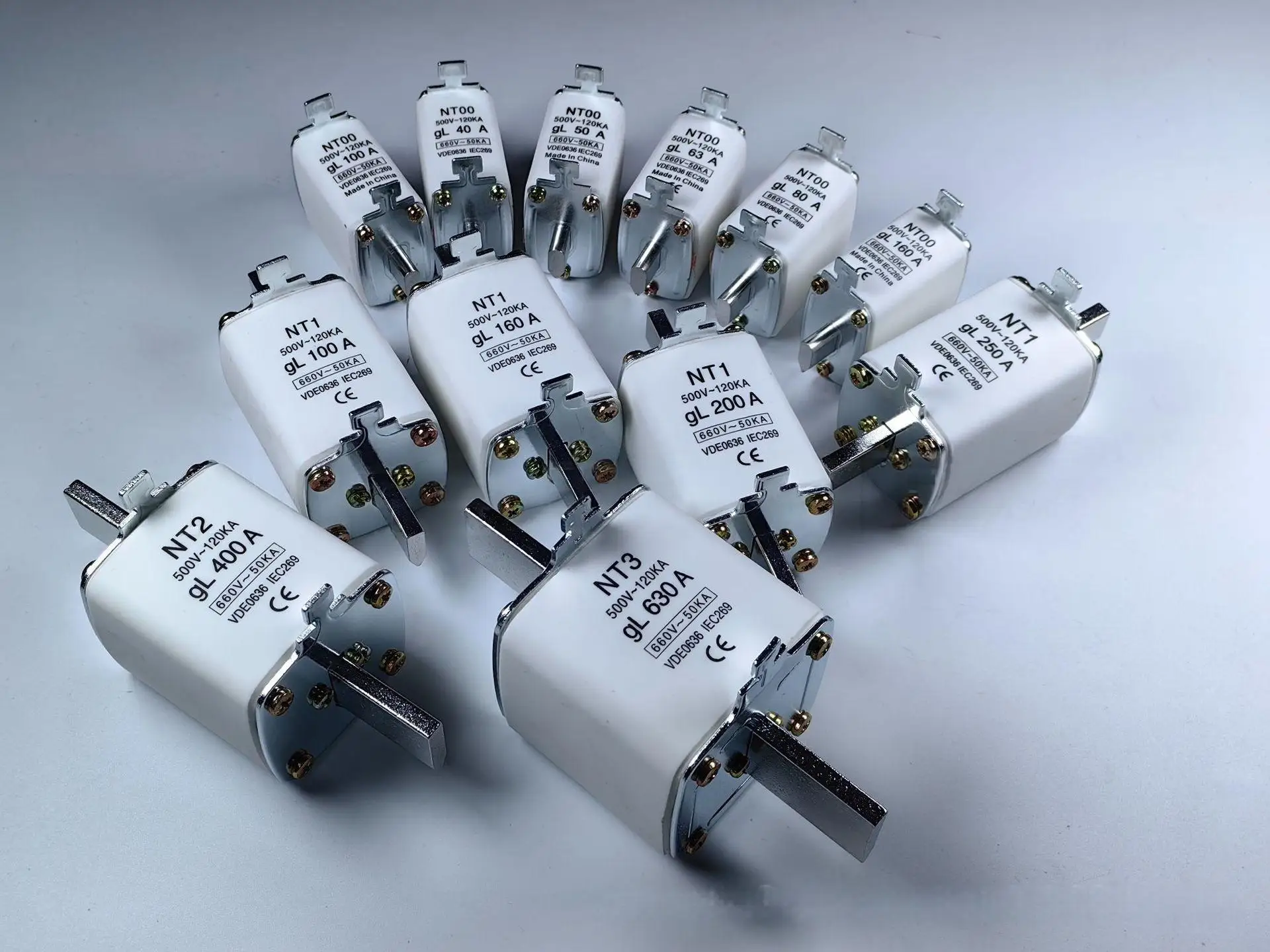
With over three decades of specialized manufacturing, ZHNYU ELECTRIC delivers AC fuse and DC fuse solutions engineered to meet the rigorous demands of modern power distribution, industrial control, and renewable energy systems. Our fuses are designed to provide precise overcurrent protection, ensuring equipment safety and operational continuity across sectors such as photovoltaic plants, petrochemical facilities, railway infrastructure, and commercial construction. Each AC fuse and DC fuse undergoes rigorous testing to comply with IEC, UL, and other international standards, backed by our ISO9001, CCC, CE, and RoHS certifications. We integrate advanced materials and precision manufacturing processes to achieve breaking capacities up to 120kA, with current ratings from 2A to 1250A, suitable for applications from residential micro-grids to heavy industrial switchgear.
Get A Quote

Case Study

Solar Farm DC Protection Upgrade Enhances System Reliability

A 200MW photovoltaic plant in Spain experienced frequent nuisance tripping due to inadequate DC fuse coordination, leading to energy yield losses of approximately 5% annually. ZHNYU ELECTRIC provided a complete set of high-quality DC fuses with accurate time-current characteristics and a breaking capacity of 20kA. Our engineers worked closely with the client to perform a system study and select appropriate fuse ratings for each string. After retrofitting, the plant reported a 40% reduction in downtime events and a 3.2% increase in annual energy generation, translating to additional revenue of €1.2 million per year.

Industrial AC Fuse Solution for Steel Mill Motor Protection

An integrated steel mill in South Korea faced frequent motor failures caused by short circuits in their control circuits, disrupting production and incurring high maintenance costs. The existing AC fuses were inadequate, leading to weak arc extinguishing and slow response times. ZHNYU ELECTRIC supplied advanced AC fuses featuring silver-plated contacts and arc-quenching materials, ensuring rapid current interruption under both overload and short-circuit conditions. After installation across 150 motor control centers, the mill observed a 70% reduction in fuse-related failures and a 30% decrease in average outage duration.

DC Fuse Integration in Electric Vehicle Charging Infrastructure

A fast-charging network operator in Germany needed robust DC fuses to protect charging stations handling up to 350kW. The challenge was to ensure safety against short circuits while maintaining high availability of charging services. ZHNYU ELECTRIC designed a custom DC fuse solution with a voltage rating of 1000VDC and a breaking capacity of 50kA, compact enough to fit into existing enclosures. Our fuses were integrated into 200 charging points across multiple locations. Within the first year of operation, the network reported zero catastrophic failures, and the mean time between failures (MTBF) increased by 45% compared to industry averages.

Related products

At ZHNYU ELECTRIC, the production of AC fuses and DC fuses is an integration of precision engineering, strict quality control, and deep industry expertise. Since 1992, we have refined our manufacturing processes to deliver fuses that not only meet but exceed international standards. Our factory spans over 10,000 square meters, housing more than 100 advanced production and testing machines. Each fuse, whether for alternating current or direct current systems, is manufactured in a controlled environment with materials selected for their specific electrical and thermal properties. 

Frequently Asked Questions

What is the difference between an AC fuse and a DC fuse?

The primary difference lies in how they interrupt currents. AC current naturally passes through a zero point each cycle, which helps extinguish arcs. DC current is continuous, making arc quenching more challenging. Therefore, DC fuses are engineered with longer fuse links and specific arc-extinguishing materials to handle the sustained arc. Our AC and DC fuses are designed accordingly to ensure reliable operation in their respective circuits.
No, it is unsafe to swap them. Using an AC fuse in a DC circuit may result in insufficient arc interruption, leading to equipment damage or fire. Conversely, DC fuses in AC circuits might be too slow or overly sensitive. Always use the appropriate fuse type rated for your system's voltage and current characteristics.
For solar PV systems, key factors include system voltage (often 600V, 1000V, or 1500V DC), short-circuit current, ambient temperature, and conductor sizing. You should select a DC fuse that has a rated breaking capacity higher than the system's possible fault current and ensure it is correctly coordinated with other protection devices. Our technical team can assist you in determining the precise fuse for your array size and configuration.
Most of our fuses provide visual indication via a built-in indicator window, which turns from red to green or displays a flag. For critical applications, we offer fuses with a striker mechanism that can trigger auxiliary contacts for remote monitoring. If you notice no continuity with a multimeter, the fuse is likely blown and must be replaced immediately.

Related Articles

How to Choose the Right Electrical Connector for Industrial Applications

31

Aug

How to Choose the Right Electrical Connector for Industrial Applications

Practical guide covering environmental, current, and compliance factors when selecting connectors.
View More
5 Common Relay Switch Failures — and How to Prevent Them

31

Aug

5 Common Relay Switch Failures — and How to Prevent Them

Diagnostic checklist for relay malfunctions with actionable prevention strategies.
View More
What Is a Contactor? A Beginner’s Guide to Low-Voltage Control Devices

31

Aug

What Is a Contactor? A Beginner’s Guide to Low-Voltage Control Devices

Clear explanation of contactors: function, working principle, and core applications in systems.
View More
How to install and replace a fuse safely in live electrical systems?

31

Aug

How to install and replace a fuse safely in live electrical systems?

Can you replace a fuse live? NFPA 70E says no—unless justified & permitted. Learn de-energize-first protocol, PPE requirements, and safe alternatives. Read now.
View More

Customer Testimonials

Daniel Miller
Reliable and High Performing Fuses

We switched our manufacturing plant to ZHNYU ELECTRIC’s AC fuses after facing frequent failures with a previous supplier. Since installation, we've seen a 40% reduction in unplanned downtime, directly impacting our production margins. The fuses are robust, easy to install, and the labeling is clear.

Sophie Anderson
Excellent DC Fuses for Solar Installations

Our solar installation company in Arizona, USA, has been using ZHNYU ELECTRIC’s DC fuses for over two years across multiple utility-scale projects, exceeding 300 kW each. The fuses have delivered flawless performance, with a failure rate of less than 0.1% in harsh desert environments.

Get a Free Quote

Our representative will contact you soon.
Email
Mobile/WhatsApp
Name
Company Name
Message
0/1000
Rigorous Global Compliance and Certification

Rigorous Global Compliance and Certification

In the international market, safety and compliance are non-negotiable. ZHNYU ELECTRIC’s AC fuse and DC fuse products are certified with ISO9001, CCC, CE, and fully comply with RoHS regulations. This means our fuses meet strict European and international safety standards, providing you with confidence when integrating into your systems. We conduct comprehensive testing in our in-house laboratory, which is equipped to simulate various fault conditions, ensuring that every fuse can handle up to 120kA breaking capacity as rated. By choosing our products, you minimize the risk of compliance issues, which can lead to expensive recalls or project delays. Moreover, we provide full documentation and traceability, assisting you in passing mandatory inspections. For customers in the photovoltaic sector, our DC fuses are designed to comply with IEC 60269-6, essential for insurance and grid connection.
Advanced Manufacturing and Custom Engineering Capabilities

Advanced Manufacturing and Custom Engineering Capabilities

With over 10,000 square meters of production space and more than 100 production equipment, we demonstrate a manufacturing capacity that is flexible and scalable. Our AC fuse and DC fuse production lines are equipped with automated winding, welding, and calibration machines, ensuring consistency and precision in every dimention. We also have a dedicated R&D team that specializes in custom design, enabling us to offer tailored solutions for unique applications. For instance, if you require a fuse with unusual current rating, special time-current curve, or custom mounting style, our engineers can work with you to develop exactly that. Quick prototyping is available, with turnaround times as short as 3 weeks for samples. We use computer-aided simulation to predict behavior under fault conditions, ensuring that the final product performs as expected.