
 EN

Why is low voltage fuse selection critical for equipment protection?
Understanding the Fundamentals of Low Voltage Fuses
In modern industrial plants, commercial buildings, and large-scale electrical distribution networks, maintaining operational continuity while ensuring absolute workplace safety remains a continuous and demanding engineering priority. Electrical distribution systems are inherently exposed to a wide variety of operational anomalies, ranging from transient voltage spikes and switching surges to severe short circuits. Within this complex web of distribution infrastructure, the humble protective fuse remains one of the most reliable, cost-effective, and time-tested safety mechanisms available to electrical engineers today. Proper low voltage fuse selection is not merely a routine compliance task or a minor checkbox during procurement; it is a foundational engineering decision that dictates how safely, reliably, and efficiently a facility handles unexpected electrical faults. A high-quality low voltage fuse functions as a dedicated current-limiting device containing a precisely calibrated internal element designed to melt, sever, and isolate the circuit the moment electrical current exceeds predetermined safe operational thresholds. When a heavy fault occurs, the internal element reacts instantly, absorbing, containing, and safely dissipating the immense thermal and electrical energy to prevent catastrophic damage to downstream components. At ZHNYU ELECTRIC, technical experts emphasize that understanding the core principles of circuit protection allows electrical designers to implement resilient systems that successfully mitigate risks and protect human operators from arc flash and electric shock hazards across diverse working environments, ensuring that both personnel and facility operations remain secure under all circumstances without exception.
The Essential Role of Reliable Overcurrent Protection
Electrical power networks are specifically designed to operate under stable, highly predictable load conditions. However, various operational factors such as equipment aging, insulation breakdown, mechanical binding in heavy-duty motors, and harsh external environmental influences can cause current levels to surge far beyond normal operational limits. Without dependable overcurrent protection, these abnormal electrical surges generate intense localized heat that rapidly degrades conductor insulation, damages sensitive transformer windings, and can ultimately trigger devastating electrical fires. Effective protection strategies require specialized components that can easily differentiate between harmless temporary inrush currents—such as those generated when large industrial electric motors start up under heavy loads—and genuine, highly dangerous fault currents. Through careful low voltage fuse selection, electrical engineers ensure that protective devices remain completely stable during normal operational spikes while reacting swiftly and decisively to sustained overloads. ZHNYU ELECTRIC designs high-capacity protective devices that offer precise current-limiting performance, effectively reducing the destructive thermal and electrodynamic stresses imposed on the entire electrical infrastructure during an overcurrent event. Furthermore, implementing robust overcurrent protection strategies guarantees that secondary hazards such as cable degradation and conductor melting are successfully prevented across all industrial branch circuits, maintaining long-term structural stability.
Navigating the Complexities of Accurate Fuse Sizing
One of the most frequent and critical challenges faced by electrical maintenance teams, system integrators, and industrial panel builders is achieving accurate fuse sizing for diverse and demanding applications. Specifying a protective fuse involves much more than simply matching the nominal operating current of a given branch circuit. Engineers must carefully evaluate a multitude of intricate variables, including ambient temperature fluctuations, conductor cross-sectional area, enclosure ventilation types, duty cycles, and the prospective short-circuit current capacity of the power source. If an incorrect size is installed, the operational consequences can be severe. A fuse with an inadequate rating will experience frequent nuisance tripping during normal motor starts, leading to costly, unplanned production downtime and frustrating plant personnel. Conversely, an oversized fuse will fail to clear moderate overloads promptly, allowing excessive thermal energy to pass through and compromise sensitive electrical components. Comprehensive low voltage fuse selection requires a balanced mathematical and empirical approach, ensuring that current-carrying capacity aligns perfectly with the protective requirements of the load. ZHNYU ELECTRIC provides comprehensive technical documentation, detailed time-current characteristic curves, and specification tables to help technicians determine optimal parameters for every specific installation.
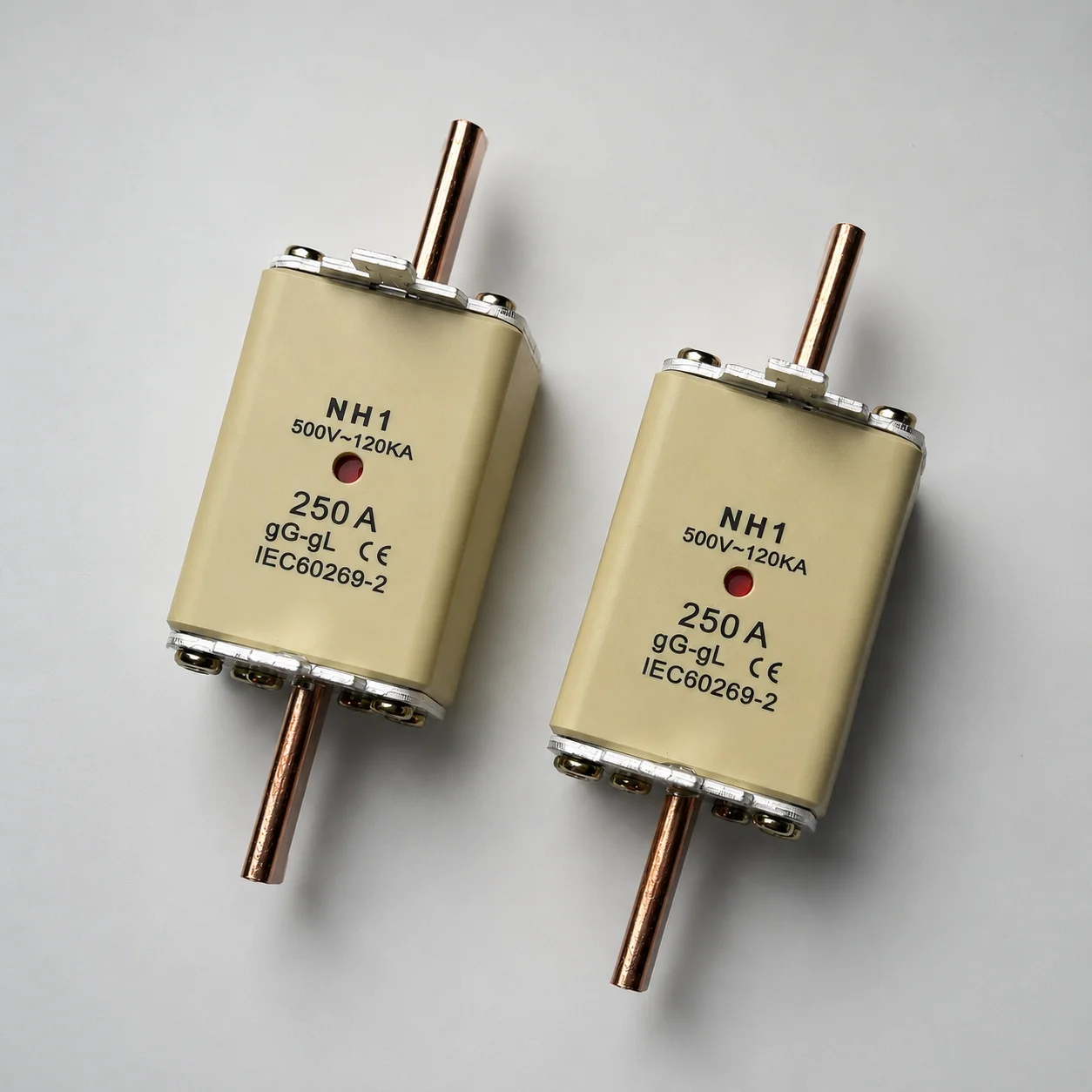
Safeguarding Industrial Assets Through Comprehensive Equipment Protection
Industrial machinery, automated production lines, and sensitive electronic control panels represent substantial capital investments for modern manufacturing enterprises. Ensuring comprehensive equipment protection is vital for maintaining productivity, minimizing maintenance overhead, and avoiding exorbitant repair costs. When a major short-circuit fault occurs in a heavy industrial setting, thousands of amperes can flow through the system within milliseconds, releasing destructive electromagnetic forces and intense heat. If the protective devices are slow to respond, switchgear, variable frequency drives, and heavy-duty motors can suffer irreversible internal damage. Implementing rigorous low voltage fuse selection practices guarantees that fault energy is restricted to minimal levels, effectively shielding valuable operational assets from destruction. Furthermore, achieving reliable equipment protection ensures that facilities comply with stringent international electrical safety standards, protecting both human life and valuable capital investments against unforeseen electrical hazards. ZHNYU ELECTRIC engineers robust low-voltage solutions capable of handling demanding industrial duties, providing rapid fault clearance, and preserving the operational integrity of mission-critical machinery across diverse global markets.
Best Practices for Long-Term Electrical System Reliability
Achieving sustained safety and long-term reliability in industrial electrical distribution requires a holistic, disciplined strategy that combines high-quality hardware, meticulous engineering calculations, and proactive maintenance protocols. Facility managers should establish routine inspection schedules to check fuse holders, mounting clips, and connection terminals for signs of oxidation, loose contacts, or thermal degradation, which can introduce high electrical resistance and localized heating. Furthermore, pairing accurate fuse sizing with strict adherence to low voltage fuse selection standards optimizes overall system performance and compliance with international safety codes. ZHNYU ELECTRIC remains dedicated to supporting industrial operators worldwide by supplying dependable, certified electrical components designed for maximum durability. By investing in quality protection devices and adhering to rigorous engineering standards, industrial facilities can safeguard their workforce, protect valuable equipment, and ensure seamless, uninterrupted operational performance for years to come.
Future Innovations in Circuit Protection Technology
As industrial automation advances and electrical networks grow increasingly complex, the future of circuit protection continues to evolve with smart manufacturing trends. Modern facilities demand advanced monitoring capabilities and faster diagnostic tools to identify vulnerabilities before catastrophic failures occur. Integrating intelligent feedback systems with proper low voltage fuse selection ensures that industrial networks remain resilient, adaptive, and fully synchronized with modern smart grid requirements.